Top 10 Tips for Choosing the Best Farm Tractors for Your Operations
Choosing the right farm tractors is a critical decision for agricultural operations, impacting both efficiency and productivity. According to the Food and Agriculture Organization (FAO), global agricultural output needs to increase by 60% by 2050 to feed the projected population of 9.7 billion people. This growing demand places immense pressure on farmers to optimize their operations through better equipment. The versatility and capability of farm tractors play a pivotal role in meeting these challenges, enabling farmers to manage larger areas of land more efficiently and sustainably.
Recent reports from the American Farm Bureau Federation indicate that approximately 30% of U.S. farmers plan to invest in new equipment, particularly farm tractors, as part of their modernization efforts. The right tractor can enhance operational efficiency, reduce labor costs, and improve crop yields. However, with numerous options available in the market, selecting the best farm tractors can be daunting. Understanding key factors such as engine power, fuel efficiency, and compatibility with various implements is vital in making an informed choice that will support the unique needs of any agricultural operation.
Understanding Your Farming Needs and Operations
Understanding your farming needs and operations is crucial when selecting the best farm tractor for your agricultural practices. Different farms have unique requirements based on the scale of operation, crop types, and geographical conditions. According to the American Society of Agricultural and Biological Engineers, nearly 15% of U.S. farms utilize tractors specifically designed for specialty crops, which highlights the importance of evaluating the specific tasks your tractor will need to perform. Understanding the terrain, whether it’s hilly, flat, or requires maneuverability between rows, plays a vital role in determining the size and type of the tractor needed.
Moreover, the power and capability of the tractor should align with your farming operations. The USDA reports that tractors are responsible for about 60% of all field work on U.S. farms, meaning that a reliable tractor can significantly impact productivity. It's critical to assess the horsepower, attachment options, and ease of use. For instance, larger farms may benefit from tractors that offer greater power for heavy tillage, while smaller or specialized operations might prioritize compact models that excel in tight spaces. By focusing on these specific operational needs, farmers can make informed decisions that enhance efficiency and ultimately lead to greater yields.
Top 10 Tips for Choosing the Best Farm Tractors for Your Operations
| Criterion |
Description |
Importance Rating (1-10) |
| Power and Performance |
Assess engine horsepower and torque to meet operational needs. |
9 |
| Maneuverability |
Look for tractors with good turning radius for smaller fields. |
8 |
| Comfort and Operator Space |
Evaluate the cab design for comfort during long hours of operation. |
7 |
| Versatility |
Consider the tractor's ability to handle different attachments. |
9 |
| Fuel Efficiency |
Efficiency in fuel consumption to lower operational costs. |
8 |
| Maintenance Requirements |
Check the ease and cost of maintenance services required. |
7 |
| Technology Features |
Evaluate advanced features such as GPS and precision farming tools. |
8 |
| Cost of Ownership |
Consider purchase price, financing options, and resale value. |
9 |
| Durability and Build Quality |
Select tractors known for their robust construction and longevity. |
10 |
| Dealer Support & Service |
Consider proximity and reputation of local dealerships for support. |
9 |
Evaluating Different Tractor Types for Specific Tasks
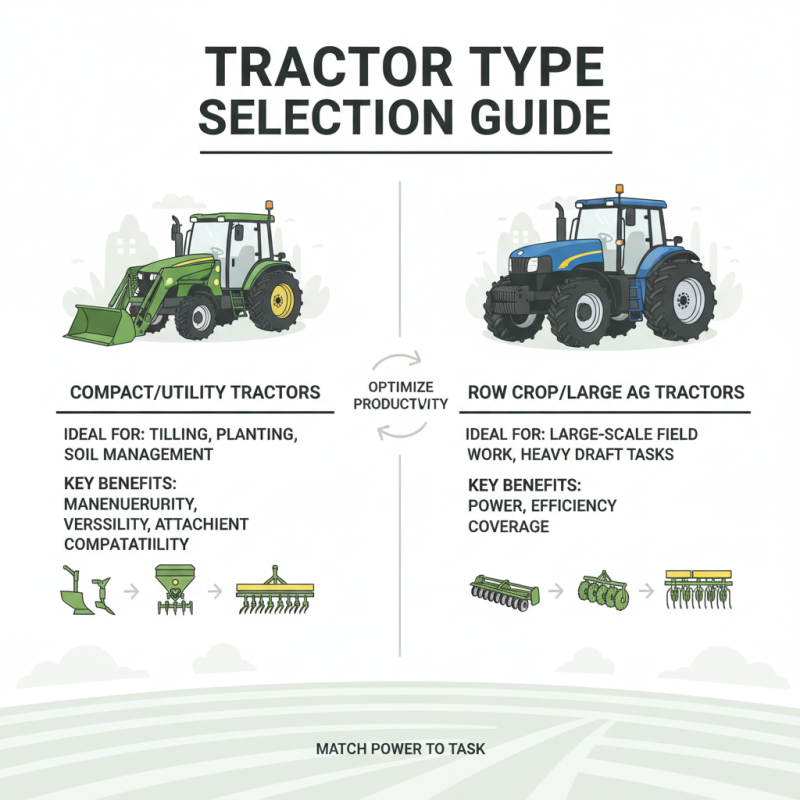
When evaluating different tractor types for specific tasks, it's essential to align tractor capabilities with the demands of your operations. For instance, if you primarily engage in tilling, planting, and soil management, a compact or utility tractor may be the ideal choice due to its maneuverability and versatility. These tractors typically come equipped with various attachments that enable farmers to perform multiple chores efficiently, leading to improved productivity across various farming tasks.
On the other hand, if your operations involve heavy lifting or the need for extensive fieldwork, larger tractors with more horsepower and advanced features are preferable. These tractors excel in tasks such as hauling, plowing, and transporting materials, making them indispensable for larger-scale farming operations. Additionally, consider specialized tractors designed for certain agricultural practices, such as orchards or vineyards, where narrow widths and specialized implements can enhance efficiency and reduce crop damage during operations. Each task requires careful consideration of the tractor's specifications to ensure optimal performance and longevity in your agricultural endeavors.
Assessing Horsepower and Engine Efficiency for Optimal Performance
When selecting a farm tractor, understanding the horsepower and
engine efficiency is crucial for optimal performance.
Horsepower indicates the tractor's capacity to perform tasks, such as plowing, hauling, and harvesting.
A tractor with higher horsepower can handle larger implements and perform heavy-duty work more efficiently.
However, it’s important to match the horsepower with the specific demands of your operations;
over-sizing can lead to unnecessary fuel consumption and increased wear on the machinery.
Engine efficiency plays a vital role in reducing operational costs and
emissions. Tractors with efficient engines consume less fuel while delivering the required power for agricultural tasks.
Look for features such as turbocharging and advanced fuel injection systems,
which enhance overall efficiency. Additionally, considering the engine's torque curve
can help determine how well it performs at various RPMs, ensuring that the tractor can maintain power under stress.
Balancing horsepower and engine efficiency
ensures that the tractor not only meets your immediate operational needs but also contributes to long-term sustainability and
cost-effectiveness on the farm.
Considering Budget and Financing Options for Tractor Purchase
When considering the purchase of a farm tractor, one of the most crucial factors to evaluate is your budget and financing options. Start by determining the total cost of the tractor, including not just the purchase price, but also additional expenses such as maintenance, insurance, and fuel. Having a clear picture of the total investment required can help you make informed decisions about which features are essential for your operations and which are not.
Financing options can also significantly impact your ability to acquire the right tractor for your needs. Many farmers opt for loans or lease agreements, which can spread the cost over time, making it easier to manage cash flow. It's important to compare interest rates, loan terms, and repayment schedules from different lenders. Additionally, look into any available government grants or subsidies aimed at supporting agricultural equipment purchases. Thorough research into these financial avenues can lead you to the best deal while ensuring you stay within your budgetary constraints, allowing for sustainable operations in the long term.
Researching Brands and Reviews for Reliability and Support
When choosing the best farm tractors for your operations, thorough research on brands and user reviews is essential for ensuring reliability and support. Look for manufacturers that have established a reputation for quality over time. Online forums, agricultural expos, and local farming communities can provide valuable insights into which brands have consistently delivered performance and durability. Engaging with other farmers can help you gather firsthand experiences, giving you a clearer picture of which tractors stand up to the demands of farm work.
In addition to brand reputation, consider customer service and after-sales support. Quality tractors require maintenance and occasional repairs; thus, it’s important to choose a brand that offers excellent support and service availability in your region. Read reviews and testimonials focusing on customer experiences regarding parts availability and service responsiveness. This information will help you ensure your tractor remains operational with minimal downtime.
Another crucial aspect is to examine the warranty terms and the quality of replacement parts. A good warranty can provide peace of mind, indicating that the manufacturer stands behind their product. Investigating the availability and prices of replacement parts will assist in budgeting for future repairs and maintenance, ultimately contributing to the long-term success of your farming operations.